
The Texas Workers’ Compensation Dispute Resolution Process
MODULE 1: LESSON 10
Most Texas workers’ compensation claims move forward without major conflict.
When disagreements do arise, Texas provides a structured dispute resolution process designed to address issues fairly, consistently, and efficiently.
The purpose of the system is not confrontation. The purpose is clarification.
The process gives employees, employers, insurance carriers, and medical providers a clear framework for resolving disagreements when questions arise about benefits, medical issues, or claim decisions.

A Simple Way to Understand Disputes
A dispute is simply a disagreement about one or more issue in a claim.
Common dispute issues include:
Whether the injury is work related
Which body parts are covered
Whether the employee has reached maximum medical improvement (MMI)
What impairment rating (IR) applies
Whether the employee has reduced earnings due to the injury
The Goal
The dispute resolution process exists to slow the situation down, review the evidence carefully, and apply the rules consistently.
The Dispute Resolution Process
Each step of the dispute resolution process builds logically on the one before it.

Step 1: Informal Resolution
Many disputes begin small and are resolved quickly without formal proceedings.
Common informal solutions may include:
A phone call between the parties
An exchange of emails
A corrected form or wage record
Clarification from the treating doctor
Additional medical documentation
Recommendation
Always attempt informal resolution first when possible.
Most misunderstandings can be resolved quickly through communication before the dispute escalates into a formal hearing.
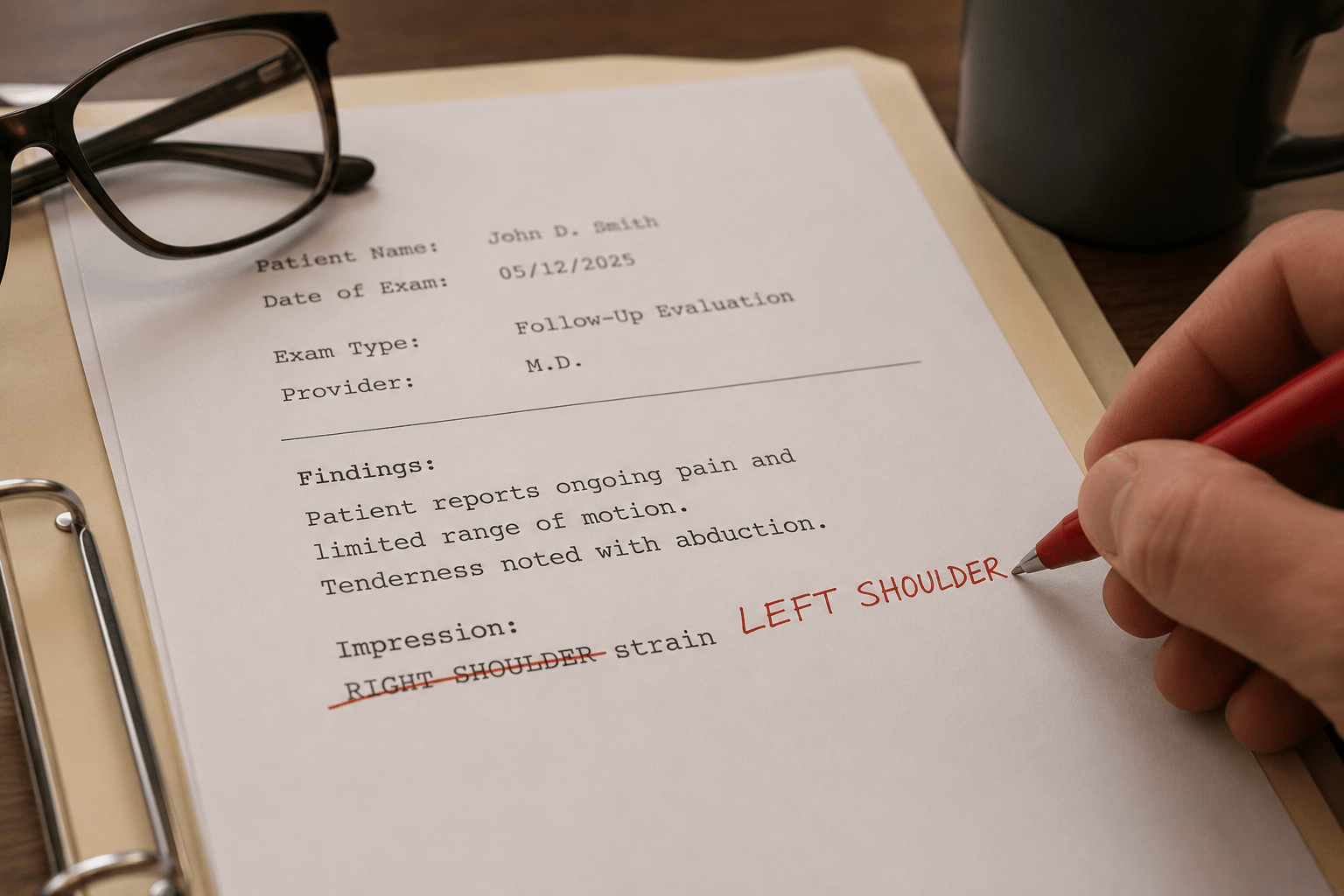
Real World Example
An adjuster receives a medical report referencing treatment to the right shoulder, while earlier records consistently referenced the left shoulder.
Instead of immediately disputing the claim, the adjuster contacts the treating doctor’s office and learns the report contained a simple dictation error.
One corrected report resolves the issue.
No hearing.
No delay.
No unnecessary dispute.

Step 2: Benefit Review Conference (BRC)
If informal efforts do not resolve the issue, the dispute may proceed to a Benefit Review Conference, commonly called a BRC.
A BRC is:
A private meeting, often conducted by video conference
Led by a trained Benefit Review Officer
Focused on identifying the disputed issues and exploring possible resolution
Remember This
A BRC is not a courtroom proceeding. There is no testimony, no judge, and no final ruling issued at this stage.
The process is designed to encourage discussion and possible agreement before moving into a more formal setting.
Some disputes resolve during the BRC process. Others proceed to the next step.

Step 3: Contested Case Hearing (CCH)
If the dispute remains unresolved, the case may proceed to a Contested Case Hearing, commonly called a CCH.
A CCH is more formal than a BRC, but it is still generally less complex than traditional court proceedings.
At a CCH:
An administrative law judge hears the dispute
Witnesses may testify
Medical and employment records are reviewed
Each side presents its position and supporting evidence
After the hearing, the judge issues a written decision explaining:
Which facts were accepted
How the law was applied
What happens next in the claim
Texas-Specific Process
Texas workers’ compensation hearings are administrative proceedings, not jury trials. The process is designed to be more accessible and less formal than traditional civil litigation.

Step 4: Appeals Panel Review
If a party disagrees with the Contested Case Hearing decision, a request may be made for review by the Appeals Panel.
The Appeals Panel:
Reviews the written hearing record
Evaluates how the law was applied
Affirms, reverses, or modifies the decision
Texas-Specific Process
There is no live hearing before the Appeals Panel.
The review occurs entirely through written submissions and the existing hearing record.

Step 5: Court, If Necessary
Only a small percentage of disputes proceed beyond the Appeals Panel into the court system.
Court involvement generally occurs only when significant legal issues exist or important procedural questions arise.
Key Takeaway
Court proceedings are typically more time-consuming, formal, and expensive than the earlier administrative stages. Court involvement is the exception, not the rule.
Remember This
Disputes do not necessarily mean someone acted improperly. Often, they simply mean additional clarification is needed.
The Goal
The dispute resolution system exists to:
Make decisions based on facts and evidence
Provide a clear legal path when disagreements arise
Promote consistency and fairness throughout the claim process
Key Takeaway
When participants understand how the process works, disputes become far less intimidating and much easier to navigate.
Knowledge Check Questions
1. What is the first formal step in the Texas workers' compensation dispute resolution process?
a. Contested Case Hearing
b. Appeals Panel Review
c. Benefit Review Conference
d. Court lawsuit
2. What is the primary purpose of a Benefit Review Conference (BRC)?
a. To conduct a trial and issue a final ruling
b. To encourage discussion and possible resolution of disputed issues
c. To determine fault for the injury
d. To calculate income benefits
3. What occurs during a Contested Case Hearing (CCH)?
a. A Benefit Review Officer issues a recommendation
b. An Administrative Law Judge reviews evidence and hears testimony
c. The Appeals Panel reviews written arguments
d. A jury determines the outcome
4. Why does the Texas workers' compensation system use a step-by-step dispute process?
a. To delay claim resolution
b. To increase litigation
c. To provide a structured method for resolving disagreements fairly and consistently
d. To reduce medical benefits
-
c
b
b
c