
Distinguishing Coverage, Compensability & Liability
MODULE 1: LESSON 4
Coverage. Compensability. Liability.
These three terms often appear together. And because they sound similar, they are often confused.
In practice, each one answers a different question. When you separate them, many claim issues become easier to analyze.
At a high level:
Coverage asks: Is workers’ compensation insurance in place, and does it apply to this claim?
Compensability asks: Does this injury qualify for benefits under workers’ compensation law?
Liability asks: Is there a legal reason benefits are not owed, even if the injury occurred at work?
Keeping these three questions in mind provides a practical framework for evaluating nearly every claim scenario.

Coverage
Coverage focuses on whether the employer participates in the Texas workers’ compensation system and whether a policy applies to the injury.
In Texas, many private employers may choose whether to carry workers’ compensation insurance.
Employers who carry coverage are called subscribers
Employers who do not are called nonsubscribers
This decision determines which system applies from the very beginning of a claim.
However, even when an employer has workers’ compensation insurance, coverage questions can still arise. For example:
Whether the policy was active on the date of injury
Whether the injured person qualifies as an employee or an independent contractor
Whether the employer is properly covered under the policy
Whether the claim involves a situation where multiple employers or policies may apply
These issues are less common, but when they arise, they can significantly affect how a claim proceeds.
Real World Example
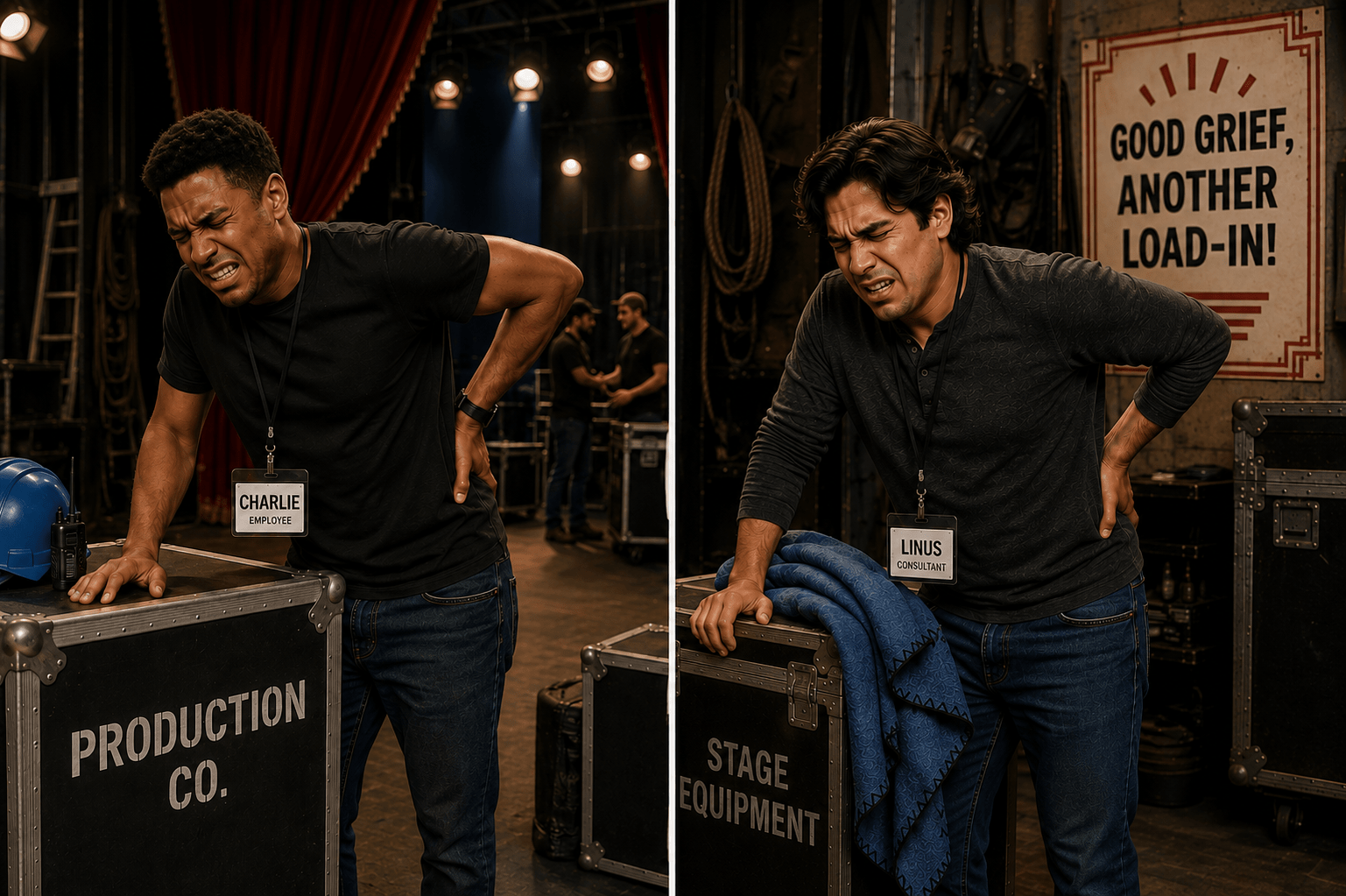
On the same day during rehearsals, each strains his back while moving stage equipment.
Charlie is on the production company’s payroll in Austin. His employer is a subscriber. He reports the injury, is directed to an approved doctor, and workers’ compensation begins paying for his medical care and a portion of his lost wages. Fault is not considered, and the claim proceeds within the workers’ compensation system.
Linus, on the other hand, was hired as an independent contractor from San Antonio to consult on the production. When he reports his injury, blanket in hand, he learns that workers’ compensation benefits do not apply to him. Because he is not an employee, he is not covered under the workers’ compensation system.
Same production.
Same work activity.
Same injury.
Different outcomes.you tell your story online can make all the difference.
Key Takeaway
Coverage is not always limited to whether an employer is a subscriber or nonsubscriber. It can also depend on the injured person’s relationship to the employer and whether a policy applies to that individual.

Compensability
Compensability focuses on whether an injury qualifies for benefits under Texas workers’ compensation law
Legal Point
Under Texas law, a compensable injury is one that arises out of and in the course and scope of employment. In practical terms, the injury must be connected to the employee’s job duties and the employer’s business.

Real World Example
Snoopy works as a home decorator in Houston when he’s not imagining himself as a World War I Flying Ace.
One afternoon, while decorating a client’s home for the holidays, Snoopy climbs a ladder to hang lights, slips, and injures his leg. He was performing work for a client at the time, so this injury is likely compensable.
Later that evening, back at home, Snoopy decides to decorate his own doghouse. While attempting a particularly ambitious display, he slips again and injures his other leg.
Same decorator.
Two injuries.
Only one occurred in the course and scope of employment.ever it is, the way you tell your story online can make all the difference.
KEY TAKEAWAY
Compensability depends on whether the injury is connected to the employee’s work, not simply whether the injury occurred.

Liability
In the Texas workers’ compensation system, liability focuses on whether benefits are owed after coverage and compensability have been established.
Even when an employer has coverage and an injury occurs in the course and scope of employment, Texas law recognizes certain exceptions that may relieve the insurance carrier of responsibility for paying benefits.
These exceptions include situations where the injury involves:
Intoxication
Horseplay
Voluntary participation in certain social or recreational activities
Acts of God
Intent to injure oneself or another
When one of these exceptions applies, the claim may not be payable, even if the injury occurred at work.

Real World Example
Lucy works as a mental health counselor in Dallas, confidently offering advice from behind her desk.
One afternoon, during a break between sessions, Lucy decides to demonstrate a “trust exercise” she recently read about. She climbs onto her desk and jumps, expecting a coworker to catch her but no one is there. She falls and injures her back.
The injury occurs at the workplace and during the workday. At first glance, it may appear to be compensable.
However, the circumstances surrounding the injury raise questions about whether an exception applies. If the activity is considered horseplay, the insurance carrier may dispute liability and deny benefits.
KEY TAKEAWAY
Liability in Texas workers’ compensation is not about fault. It is about whether an exception applies that prevents the payment of benefits, even when coverage and compensability are established.

Recommendation: A Practical Claim Checklist
When a claim issue arises, work through these questions in order:
Coverage: Does workers’ compensation apply to this claim, including whether the employer has coverage and whether the injured person is covered under that policy?
Compensability: Did the injury occur in the course and scope of employment?
Liability: Is there a legal exception that prevents the payment of benefits?
This sequence helps clarify issues before assumptions are made or conclusions are reached.

Remember This
Coverage tells you whether the workers’ compensation system applies and whether the claim is covered under it
Compensability tells you whether the injury qualifies for benefits
Liability tells you whether a legal exception prevents benefits from being paid
Knowledge Check Questions
1. In Jack’s claim, what question does “coverage” answer?
a. Whether Jack’s injury is serious
b. Whether the workers’ compensation system applies to Jack and his injury
c. Whether Jack followed safety rules
d. Whether the employer admits fault
2. Which scenario from the lesson best illustrates a compensability issue?
a. Jack working for a nonsubscriber employer
b. Jack injuring his knee at work versus injuring it later at home
c. Jack filing his DWC-041 form late
d. Jack returning to work with restrictions
3. What does “liability” focus on in the Texas workers’ compensation system?
a. Determining who caused the injury
b. Deciding how much medical care is needed
c. Determining whether a legal exception prevents benefits from being paid
d. Determining whether the claim was reported on time
4. What is the correct order for analyzing a workers’ compensation claim?
a. Liability → Coverage → Compensability
b. Compensability → Liability → Coverage
c. Coverage → Compensability → Liability
d. Coverage → Liability → Compensability
-
b
b
c
c