Our Workers’ Comp Community: The Case for Uncertainty
BY JOHN MOLINAR
About fifteen years ago, when the idea of “finding your why” was making its way into conference rooms and leadership books, I found myself drawn to a simple conviction.
If you work a claim hard enough, long enough, and carefully enough, you can remove uncertainty and replace it with certainty.
It made sense to me then.
And to be fair, it still makes sense… right up until the point it doesn’t.
Because if life has taught me anything, whether in workers’ compensation or at home trying to assemble something with instructions that appear to have been translated from Sanskrit, certainty has a way of arriving early and leaving quietly.
The Thing We Don’t Like to Admit
Workers’ compensation, at its core, is built on uncertainty. It always has been.
An injury occurs, but the cause is not always clear.
Treatment begins, but the outcome is not always predictable.
A return to work is expected, but the timeline is rarely precise.
Even the questions we’re asked to answer, maximum medical improvement, impairment, extent of injury, causation, are attempts to bring structure to something that resists being neatly defined.
For years, our job has been to manage that uncertainty. To narrow it. To translate it into something that feels actionable and fair.
But eliminate it? That’s an entirely different promise.
A Drive Back from Houston
Not long ago, I was driving back from a contested case hearing in Houston to my home in Rockwall, one of those long stretches on I-45 where your mind tends to wander and you begin debating whether it’s too soon to stop at Buc-ee's for a brisket sandwich and a bag of Beaver Nuggets.
Somewhere along the way, I listened to an episode of The Curiosity Shop podcast titled Uncertainty Is Not the Enemy, a conversation between Brené Brown and Adam Grant, both renowned social scientists and researchers who study human behavior, emotion, and organizational psychology.
They weren’t talking about uncertainty in a theoretical sense. They were exploring something more human. What happens when people feel pressure to have the answer? How quickly we move to close the gap between not knowing and knowing. And how that instinct, while understandable, can quietly pull us away from better thinking.
One idea in particular stayed with me. Our brains are not particularly fond of uncertainty. In fact, they treat it like a threat. Not metaphorically. Biologically. The same internal system that reacts to physical danger also reacts when we don’t know the answer to something.
And when people feel that discomfort, they tend to resolve it quickly. Not necessarily correctly. Just quickly.
Which leads to something we don’t talk about enough. Sometimes people prefer a confident answer that’s wrong over an honest answer that’s uncertain.
What That Looks Like in Real Life
Think about how that plays out in our world.
I once handled a claim involving an employee who reported a back injury after lifting equipment. There were inconsistencies in the initial report. The mechanism of injury was questioned. The file began to lean in a particular direction early.
A decision was made. And once it was made, everything that followed was viewed as reinforcing a particular outcome.
Witness statements that didn’t quite fit were viewed with skepticism. Medical evidence was filtered through the assumption that the injury was not what it appeared to be. Conversations became more guarded. Positions became more fixed.
Weeks later, additional evidence told a different story. By then, the claim had already hardened. Not because anyone intended it. But because certainty had arrived too early and stayed too long.
We’ve all seen some version of that story.
A file that starts to close before it should.
A position that becomes increasingly difficult to revisit over time.
A claim that turns out to be more complicated than it needs to be.
Not because of a flaw in the system. But because we did what people naturally do when uncertainty feels uncomfortable. We resolved it.
When we rush to certainty, we don’t just simplify the claim. We narrow it.
We begin to filter new information through the lens of what we’ve already decided. We become less curious. Less open. Less willing to revisit assumptions that may need revisiting.
In those moments, certainty feels like control. But more often than we realize, it’s just comfort.
The Value of Uncertainty
Every now and then, an idea about uncertainty doesn’t just stay in a conversation. It follows you into other places.
That’s what stayed with me from The Curiosity Shop. At one point in the discussion, Brené Brown reflected on how our need to appear certain can quietly undermine connection and decision-making. She referenced an excerpt from the movie Conclave that included the line: “Certainty is the enemy of unity.”
It’s a simple idea. But it’s not an easy one.
And it led me back to a moment in that film that quietly sets the tone for everything that follows.
The setting is the Sistine Chapel, filled with cardinals in red robes, the kind of stillness that carries weight rather than comfort. The air feels tight, almost claustrophobic, not because of the space, but because of what is at stake. Decisions of consequence. Competing perspectives. A room full of people who care deeply about getting it right.
Ralph Fiennes’ Cardinal Lawrence steps forward to speak, carrying the visible weight of someone who understands just how much uncertainty surrounds the moment.
And then he offers something striking:
“If there was only certainty… and no doubt… there would be no mystery. And therefore, no need for faith.”
His warning is subtle but powerful.
Certainty, when it hardens too quickly, can become a barrier rather than a guide. When we become convinced we already have the answer, we stop listening. We stop questioning. We stop seeing the full picture.
And then he offers something that feels almost counterintuitive.
That doubt, handled properly, is not weakness. It is what keeps thinking alive. It is what keeps people open to one another. It is what prevents decisions from becoming rigid before they are fully understood.
You don’t have to share the setting, or the tradition to recognize the power.
We have all been in rooms like that.
Places where the pressure to be certain is high, the stakes feel immediate, and the temptation to settle on an answer comes just a little sooner than it should.
A Different Way to Think About It
What if uncertainty isn’t the enemy? What if it’s actually part of the work?
Not the part we eliminate, but the part we learn to navigate better.
In a system that increasingly relies on data, analytics, and artificial intelligence, the temptation will be to reduce ambiguity as much as possible. And there’s value in that.
Better data can improve consistency.
Better tools can reduce delay.
Better systems can identify patterns we might otherwise miss.
But none of those things eliminates the human reality that not every claim fits neatly into a model.
Some injuries don’t follow expected timelines.
Some recoveries take unexpected turns.
Some stories take longer to fully understand.
And in those cases, uncertainty is not a flaw. It’s reality.
The Leadership Test We Don’t Talk About
There’s a quiet form of leadership in workers’ compensation that doesn’t get much attention. It’s not about having the fastest answer. It’s about holding space for the right one.
That means being willing to say:
“We don’t know yet.”
“Let’s take a closer look.”
“Something here doesn’t quite add up.”
Not as a delay tactic. Not as an excuse. But as a recognition that good decisions are often made in stages, not in moments.
That kind of restraint doesn’t always feel comfortable. But it often leads to better outcomes. And better conversations along the way.
So…Did I Get It Wrong?
Lately, I’ve found myself revisiting the idea I used to believe with a fair amount of confidence.
The idea that if you work a claim hard enough, long enough, and carefully enough, you can remove uncertainty and replace it with certainty.
I don’t think it was wrong. But I do think it was incomplete.
Because the real value we bring to this system isn’t that we eliminate uncertainty. It’s that we help people move through it.
With clarity when we have it.
With honesty, when we don’t.
And with enough judgment to know the difference.
Where This Leaves Us
Workers’ compensation is not getting simpler.
The nature of work is changing.
Medical science is evolving.
Technology is accelerating how we process information.
If anything, the system is becoming more complex, not less. Which means our relationship with uncertainty has to change too.
Less about avoiding it. More about understanding how to work within it.
Less about rushing to answers. More about asking better questions.
Because uncertainty isn’t going away.
But how we respond to it. That’s still up to us.
Pull up a chair.
Let’s get to work.
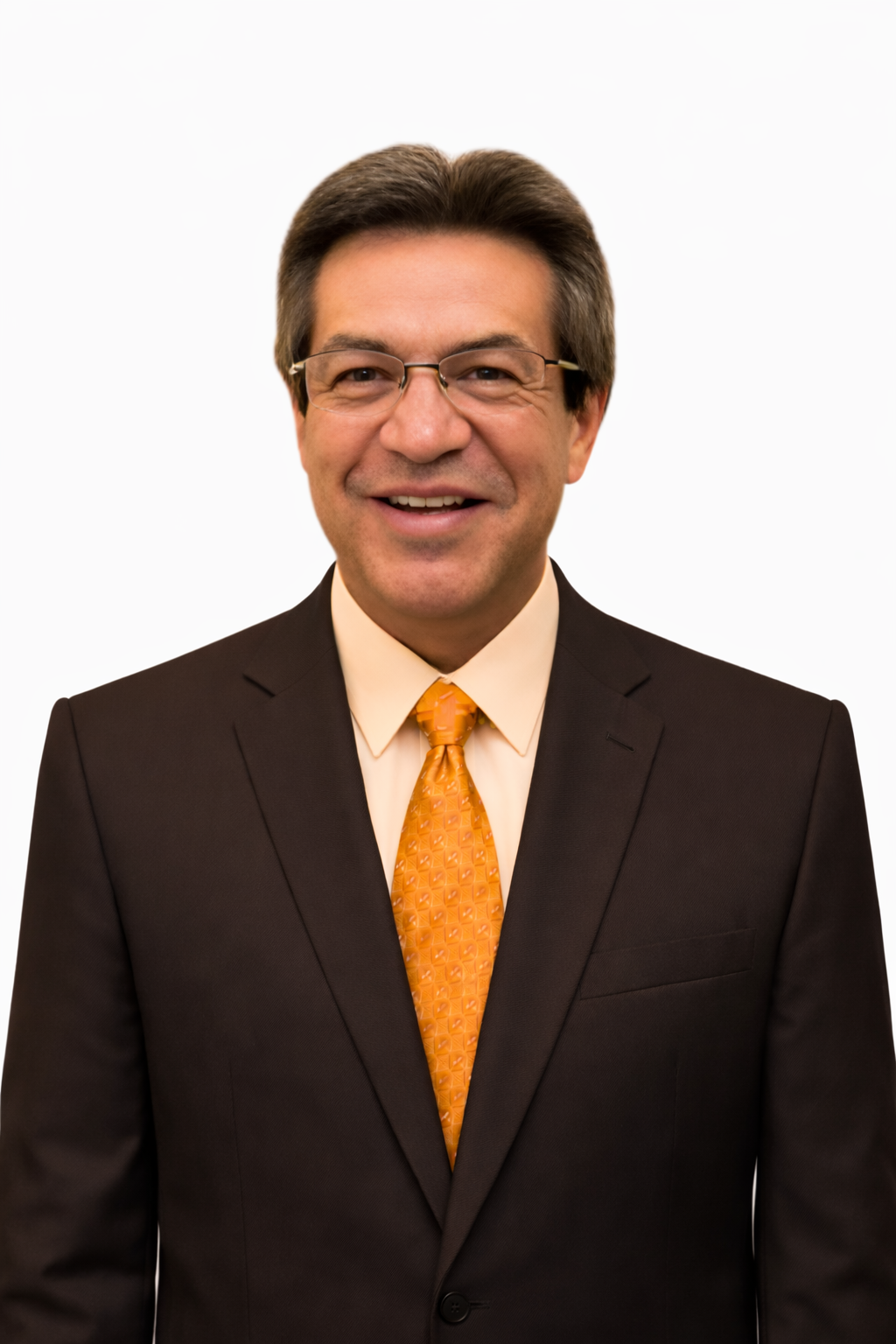
AUTHOR
John Molinar is a Board Certified Workers’ Compensation attorney and industry leader, offering practical insight shaped by decades of experience across the Texas system.
→ Follow John on LinkedIn
→ Follow Hermes Law on LinkedIn
Looking for a clearer understanding of Workers’ Compensation in Texas?
CompDeck offers short, focused video lessons that break down Texas workers’ compensation into practical, real-world insight.
OUR WORKERS’ COMP COMMUNITY SERIES: