Our Workers' Comp Community: Look For The Helpers
BY JOHN MOLINAR
Fred Rogers once shared that when he was frightened as a little boy, his mother gave him a simple piece of advice:
"Look for the helpers."
Most of us heard those words long before we understood why they mattered.
Think back for a moment. Who were your heroes when you were growing up? Were they the strongest people in the room? The loudest? The ones who always won the argument?
Or were they the people who quietly stopped to help?
Maybe it was Atticus Finch standing beside a man no one else would defend in To Kill a Mockingbird. Maybe it was George Bailey discovering that a life measured by kindness is never a small life in It's a Wonderful Life. Maybe it was Mister Rogers kneeling so he could look a child in the eyes because every child deserved to feel seen.
Those stories stayed with us because they reflected something we instinctively understood as children: being seen matters. Being treated with dignity matters. Kindness matters.
Looking back, it's tempting to believe people were simply kinder when we were young. Maybe they were. Or maybe childhood allowed us to notice kindness more easily because we hadn't yet learned to divide the world into sides.
What I do know is this: somewhere along the way, something changed. We became more interested in deciding who was right than in understanding someone else's perspective. Without even noticing it, we stopped looking first for the helper and started looking for the first person to blame.
When did that happen? And just as importantly, has it happened to you?
The Stories We Tell Ourselves
Today, our culture often rewards certainty far more than humility. Algorithms surround us with voices that sound like our own. Television “news” panels transform disagreement into entertainment. Social media flattens complicated human experiences into champions and scapegoats before we've had time to ask a single thoughtful question.
That environment doesn't necessarily make us cruel. It makes us certain. And certainty is one of empathy's greatest enemies because certainty rarely feels the need to ask another question.
Workers' compensation is no exception. In many ways, our profession sits at the intersection of competing stories.
An injured worker may believe the insurance adjuster doesn't care.
An adjuster may quietly wonder whether the worker is being completely truthful.
An employer may feel disappointed or even betrayed when a valued employee files a claim.
An attorney may become convinced the other side is acting in bad faith.
Each person arrives carrying a story shaped by experiences the others may never fully understand. But every time we become convinced that only our perspective matters, we learn less than we should have.
Maybe that's the real danger. It isn't that we have different stories. Different experiences are inevitable.
The danger comes when we become so certain of our own story that we stop trying to understand anyone else's.
And that's why I've become increasingly uncomfortable with a phrase that's gained popularity in recent years: toxic empathy.
The Misunderstanding About Empathy
Advocates of the phrase toxic empathy argue that empathy clouds judgment, elevates feelings above facts, and encourages decisions based on emotion rather than evidence.
Workers' compensation certainly cannot function that way. Claims require medical opinions, statutory deadlines, objective evidence, and legal standards. Those safeguards exist for good reason.
But empathy was never designed to replace judgment. It was designed to improve it.
Empathy doesn't ask us to ignore evidence. It invites us to gather it, including the evidence that rarely appears in a medical record or a hearing exhibit. Because every claim file has two stories: one that is documented and one that is lived. The documented story tells us what happened. The lived story tells us what it felt like.
Can we really understand a dispute if we only know one of those stories?
When Good People Stop Seeing Others
History offers a sobering reminder.
Most harmful systems weren’t built by villains twirling imaginary mustaches. They were built by ordinary people. Their thinking was shaped by institutions, authority figures, cultural expectations, fear, and the quiet reassurance that people outside their group deserved just a little less understanding.
Psychologists describe this process as dehumanization. It rarely begins with hatred. It begins with labels.
Once someone becomes "the claimant," "the carrier," "management," "the plaintiff's lawyer," or "the defense attorney," it becomes much easier to forget there is a human being behind the title.
Have you ever caught yourself making assumptions about someone before you had even met them? I know I have.
That realization is humbling because it reminds us how easily we can begin seeing categories instead of people. That's why I struggle with the phrase toxic empathy.
Empathy isn't what becomes toxic.
The truly toxic force is any culture that convinces us that certain people deserve less empathy than others.
Fear creates distance. Kindness narrows it. Fear teaches us to protect ourselves from one another. Kindness reminds us that, despite our different roles, we have far more in common than we sometimes realize.
Fairness Needs Kindness
None of this suggests we abandon our ideals. Workers' compensation depends on evidence, medical opinions, and legal rules. Fairness requires consistency, and consistency requires objective standards.
Kindness doesn't compete with those principles. It gives them purpose.
Kindness is not paying claims that shouldn't be paid. It’s not ignoring fraud or overlooking misconduct. It’s not abandoning professional judgment.
Kindness asks only one question before every important decision: Have I remembered there is a human being on the other side of this file?
The answer to that question isn't found in a statute or an administrative rule. It's found in how we choose to show up.
Every person in this system brings a different perspective. Our roles differ. Our responsibilities differ. Our experiences differ. We will not always agree about what fairness requires.
Kindness, however, asks something more of us.
It asks us to be patient when frustration would be easier, to be respectful when disagreement feels justified, and to be willing to see the person before we judge the position.
Our perspectives may be shaped by the roles we play. Kindness should never be. It is the one standard that belongs to all of us equally.
Choosing to See One Another
Every claim eventually ends. The hearings close. The deadlines for appeals expire. The file is archived. But people rarely remember only the legal outcome.
They remember whether someone listened. Whether someone explained. Whether someone treated them with respect. Whether someone made them feel seen.
Maybe that was Mister Rogers' lesson all along.
After 33 years in workers' compensation, I've come to believe empathy doesn't compete with professionalism. It completes it.
Justice matters. Accountability matters. Facts matter.
But kindness reminds us why those things matter in the first place.
So before you open the next file, answer the next email, or walk into the next hearing, pause long enough to remember what Mister Rogers was trying to teach us.
Look for the helpers.
They aren't always the people who solve the problem. Sometimes they're simply the people who refuse to let the process erase the person.
Pull up a chair.
Let's get to work.

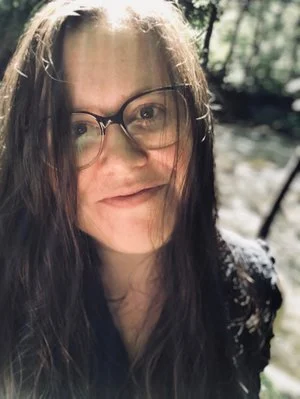
AUTHOR
John Molinar is a Board Certified Workers’ Compensation attorney and industry leader, offering practical insight shaped by decades of experience across the Texas system.
→ Follow John on LinkedIn
→ Follow Hermes Law on LinkedIn

Looking for a clearer understanding of Workers’ Compensation in Texas?
CompDeck offers short, focused video lessons that break down Texas workers’ compensation into practical, real-world insight.
OUR WORKERS’ COMP COMMUNITY SERIES: